Direct China Manufacturer • Serving Italian Logistics Hubs

Top China Warehouse Roller Racks Manufacturers & Exporter serving the Italy market

Heavy-Duty Gravity Pallet Flow, Dynamic Roller Track Systems & Seismic-Engineered Racking Solutions Certified to UNI EN 15512, UNI EN 16681 and NTC 2018 Standards for Northern & Central Italy Distribution Corridors.

Export Catalog: Italy Market

Featured Warehouse Storage & Dynamic Roller Systems

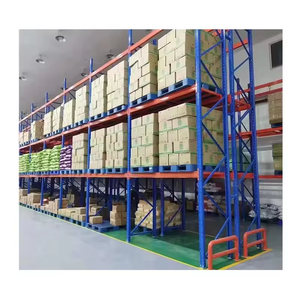
Factory-direct structural steel racks and live storage systems configured for standard European EPAL 1 (800×1200 mm) and EPAL 2/3 platforms, designed for continuous FIFO/LIFO turnover in Italian warehousing environments.

EN 15512
European Structural Standard
Static calculations verified
+65%
Cube Space Optimization
Compared to selective aisles
NTC 2018
Italian Anti-Seismic Ready
UNI EN 16681 compliant nodes
100%
Euro-Pallet Compatibility
EPAL 1 (800x1200) & EPAL 2
Technical White Paper

Mechanics of Pallet Roller Flow: Gravity Slope, Centrifugal Braking & Separators

In-depth structural engineering considerations for industrial roller beds running high-throughput dynamic storage lanes in Italian logistics centers.

Warehouse roller racks (commonly referred to in European intralogistics as rulliere a gravità or scaffalature dinamiche a rulli) operate on dynamic gravity-fed principles where inclined roller beds convey unit loads from loading faces to retrieval faces. Unlike conventional static pallet racking, gravity roller systems condense multiple aisles into deep-lane storage tunnels, achieving strict FIFO (First-In, First-Out) or high-density LIFO (Last-In, First-Out) rotation. For Italian procurement teams seeking long-term operational reliability, the structural design requires fine-tuned kinetic balancing to accommodate variable pallet qualities, temperature extremes, and safety deceleration.

Storage Topology Space Utilization Handling Logic Throughput Rate CAPEX Ratio Italian Industrial Fit
Dynamic Pallet Flow (Roller Racks) Up to 85% volumetric density Strict FIFO (Continuous Flow) Very High (Gravity indexing) Moderate – High FMCG, Food Valley cold chain, pharma hubs
Radio Shuttle Cart Racking Up to 88% volumetric density FIFO or LIFO (Semi-automated) High (Battery drive shuttle) High (Motorized bots) Deep-lane beverage buffers & mass packaging
Push-Back Roller / Cart System Up to 70% volumetric density Strict LIFO (Push principle) Moderate Moderate Medium turnover batch lots (2-6 pallets deep)
Standard Selective Pallet Racking 35% – 45% volumetric density Random Access (100% selective) Standard (Dependent on lift truck) Low baseline Wide-SKU spare parts, small logistics centers
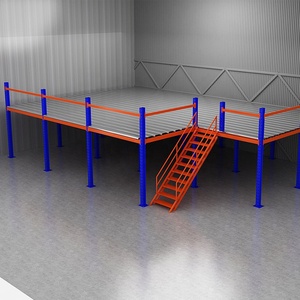
Industrial Multi-Tier Mezzanine +100% to +300% usable floor Manual / AMR picking access High for split-case picking Moderate Milan fashion eCommerce, textile & tooling hubs

Controlled Incline Gradient (3.2% – 3.8%)

Gravitational descent velocity is directly governed by track pitch. For standard European EPAL wooden pallets carrying 400 kg to 1,200 kg, our track slope is calibrated at 3.5% (approx. 2 degrees). This prevents inertia stall while curbing runaway velocity across 10- to 25-meter deep lanes.

Pitch: 3.5% Anti-Stall Rollers Galvanized Cylinders

Viscous Centrifugal Brake Rollers

To ensure pallets maintain a controlled descent speed below 0.3 m/s, heavy-duty internal centrifugal brake rollers are engineered at intervals along the track. The dynamic braking torque scales proportionally with pallet mass, safely dampening kinetic impact forces on downstream loads.

Max Speed ≤ 0.3 m/s Centrifugal Core Shock Isolation

Load Separator & Pallet Discharge Stop

Essential for forklift extraction safety: mechanical pallet separation mechanisms hold back all trailing pallets while the frontline pallet is being retrieved. Trailing pressure is neutralized, eliminating back-pressure wedging and ensuring compliant operator extraction under European safety directives.

Zero Back-Pressure Mechanical Interlock EN 15635 Compliant
Italian Industrial Footprint

Localized Application Scenarios Across Italy's Economic Corridors

How our heavy-duty roller racks and modular platforms solve floor-space scarcity and throughput demands across key logistical districts in Italy.

Lombardy & Po Valley (Verona, Piacenza, Novara)

Serving Northern Italy’s primary 3PL crossroads. Facilities along the A4 and A1 freight highways face elevated rental rates per square meter. Our high-density gravity roller beds transform cross-dock dispatch staging by condensing 16 staging bays into 4 dynamic gravity feed tunnels, boosting throughput speed for intermodal truck transit.

3PL Contract Logistics Cross-Dock Staging High Floor Value

Emilia-Romagna: Food Valley Cold Chain

From dairy and cured meat processing near Parma and Modena to frozen packaging in Bologna, sub-zero warehouse space carries severe cooling refrigeration costs. Roller racking minimizes cubic air volume requiring refrigeration by eliminating forklift corridors, while ensuring flawless batch tracking for PDO/PGI perishables.

Cold Store (-25°C) HACCP & Food Grade Batch Traceability

Piedmont & Veneto: Motor & Industrial Machinery

Tier-1 automotive component producers and machinery manufacturers utilize our roller track carton flow racks (rulliere per minuteria) and heavy-duty die racks for lean workstation supply. Flow beds interface directly with AGVs or manual line operators to execute just-in-time (JIT) Kanban sequences.

Kanban Carton Flow AGV & AMR Feeder Lean Manufacturing
Strategic Market Outlook

Italian Logistics Trends: Piano Transizione 5.0, ESG & Anti-Seismic Norms

Aligning warehouse hardware engineering with Italy’s regulatory frameworks and decarbonization incentives.

Piano Transizione 5.0 Synergy

Italy’s Piano Transizione 5.0 incentives place intense emphasis on energy reduction. Gravity roller racks utilize zero electrical power for horizontal pallet movement within lanes, replacing motorized conveyors. When paired with automated stacker cranes or AGVs, facility energy consumption declines by up to 38% compared to traditional mechanical layouts.

Strict Anti-Seismic Engineering (NTC 2018)

With vast areas of the Italian peninsula categorized in Seismic Zones 1, 2, and 3 under Norme Tecniche per le Costruzioni (NTC 2018), warehouse racks must be treated as significant civil engineering structures. Our factory delivers full structural calculation packages adhering strictly to UNI EN 16681, incorporating seismic base isolation plates, ductile bracing nodes, and enhanced upright thickness.

Brownfield Warehouse Retrofit Trend

High permitting lead times and environmental zoning restrictions in industrial Lombardy and Veneto have driven Italian developers toward retrofitting legacy buildings. Our modular roller bed inserts allow Italian operators to convert existing static selective racking uprights into high-density gravity flow corridors without requiring floor re-pouring or civil alterations.

Manufacturing Authority

Why Italian Warehouse Integrators & Direct Buyers Partner With Us

Combining Chinese manufacturing scale, certified European structural steel standards, and deep technical support for intralogistics EPCs.

Certified European S355 Steel

Cold-roll-formed profiles engineered from high-tensile certified structural steel, compliant with EN 10025 chemical and mechanical tolerances with full mill test certificates (MTC).

In-House Finite Element Analysis (FEA)

Every roller rack system is modeled in dynamic 3D simulation software to verify beam deflection ratios (≤ L/200 as per UNI EN 15512) and frame load buckling safety factors.

Precision Roller Track Manufacturing

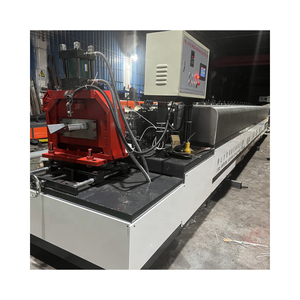
Full CNC stamping and automated assembly lines for roller rails, steel rollers, and polymer braking drums ensure smooth rotation and zero binding across multi-bay systems.

Direct Port Shipping to Genoa & Trieste

Customized ocean export packaging, anti-corrosive VCI wrapping, nested bundling, and coordinated customs documentation to ensure seamless clearance across Italian seaports.

Request an Engineering Layout & Seismic Load Calculation

Are you planning a new gravity flow facility or retrofitting an existing warehouse in Italy? Speak directly with our intralogistics design team to obtain DWG layouts, capacity analysis, and direct factory pricing.

Procurement Intelligence

Frequently Asked Questions by Italian Logistics Directors & Purchasing Heads

Direct technical, regulatory, and commercial answers for importing and commissioning warehouse roller racks in Italy.

How do your roller racks accommodate standard Italian EUR/EPAL 1 vs. industrial pallets? +
Our roller tracks are engineered specifically to accommodate standard European pallets, predominantly the EPAL 1 (800 × 1,200 mm) oriented in either direction, as well as industrial EPAL 2 / CHEP (1,000 × 1,200 mm) formats. Because bottom skid configurations (bottom boards) can vary significantly across reused European pool pallets, we utilize 3-track or full-width steel roller configurations equipped with entry alignment funnels. This prevents cracked or sagging bottom boards from snagging between roller pitches and ensures continuous, smooth descent.
How do you certify structural compliance with Italian seismic standards (NTC 2018 / UNI EN 16681)? +
For Italian projects, seismic analysis is integrated directly into the engineering phase. Under UNI EN 16681 and NTC 2018, our engineering team executes modal response spectrum analyses matching the specific seismic acceleration coefficient ($a_g$) and soil class of your Italian installation site (e.g., Verona, Bologna, or Caserta). We provide formal static and dynamic calculation reports, engineer-approved connection nodes, heavy-duty floor anchor bolt sizing, and load capacity plates (tabelle di portata) required by Italian workplace safety inspectors (ASL / INAIL).
What slope angle and braking roller layout are recommended for variable weights (300 kg to 1,000 kg)? +
When handling variable weight pallets within the same lane, our standard engineering recommendation is an inclination gradient of 3.5%, coupled with dynamic centrifugal brake rollers installed every 2 pallet positions (approx. every 2.4 to 2.8 meters). Unlike cheap magnetic or passive rollers, centrifugal brake rollers generate resistance that is directly proportional to the downward velocity and weight of the pallet. A 300 kg load passes without sticking, while a 1,000 kg load is actively governed to stay under the safe impact threshold of 0.3 m/s.
What is the standard delivery timeframe to Italian ports such as Genoa, La Spezia, or Trieste? +
Custom fabrication for a standard 500- to 3,000-pallet-position roller rack project typically requires 25 to 35 days at our factory. Ocean transit from major Chinese container ports (Shanghai / Ningbo / Qingdao) to Italian ports (Genoa / La Spezia for Western/Northern Italy, or Trieste / Venice for North-Eastern corridors) takes approximately 28 to 36 days depending on shipping line routing. We provide comprehensive export documentation, including Bills of Lading, Certificate of Origin, Packing Lists, and CE Declarations of Conformity.
Can your roller modules be retrofitted into existing selective pallet racking frames? +
Yes. We supply drop-in dynamic roller cassettes that can be mounted directly onto existing horizontal load beams from major European rack manufacturers, provided the existing upright frames have sufficient load capacity verified against UNI EN 15512. Our modular mounting brackets attach directly without on-site welding or drilling, converting standard static bays into 2- to 8-deep dynamic gravity flow picking lanes.
How do your roller racks perform in temperature-controlled cold storage (-25°C)? +
Our cold-storage roller beds are explicitly engineered for deep-freeze logistics (-25°C to -30°C). Rollers are manufactured using heavy-gauge pre-galvanized or hot-dip galvanized steel tubes fitted with low-temperature synthetic grease bearings. Centrifugal speed controllers use cold-resilient silicon fluid that maintains steady kinematic viscosity without freezing, preventing roller locking and belt slippage common in poorly designed cold chain systems.
What safety equipment prevents pallet push-through and extraction collisions? +
Each lane is equipped with an integrated structural steel end-stop welded directly to the discharge beam. Additionally, for lanes deeper than 3 pallets, a mechanical load separator is installed at the pick face. When a forklift lifts the frontline pallet, the separator arm springs upward, holding the entire line of upstream pallets stationary until the operator has fully cleared the bay. This eliminates hydrodynamic push-through forces and prevents product damage or tip-overs.
What maintenance is required to maintain compliance with European standard UNI EN 15635? +
Under UNI EN 15635 (Application and Maintenance of Storage Equipment), warehouses must perform regular visual checks and annual technical inspections. Gravity roller tracks have minimal mechanical wear compared to automated AS/RS systems. Routine maintenance is limited to bi-annual debris inspection inside roller tracks, verifying free rotation of brake cylinders, and inspecting separator safety locks. We supply full operation and maintenance manuals (O&M) and replacement component packs for swift field upkeep.

Streamline Your Warehouse Storage With Factory Direct Precision

Partner with a dedicated manufacturer experienced in delivering heavy-duty pallet flow, dynamic roller beds, and certified high-density racking to European structural and seismic standards. Receive preliminary engineering drawings, static load calculations, and comprehensive commercial quotations within 24 hours.